
Quick summary: Before paying for any property in Dhaka, verify the title deed, known as the dolil, the mutation and khatian, up to date land and municipal tax receipts, the RAJUK approved building plan, and the developer to landowner agreement for developer projects. For a ready flat, also confirm the occupancy certificate and that there is no existing loan or mortgage on the unit. For a plot in a planned area like Jolshiri Abashon, additionally confirm the allotment and transfer eligibility. Skipping legal verification is the single most expensive mistake a Dhaka buyer can make.
A cheap flat with clouded documents is not a bargain. It is a trap. It can become impossible to resell, impossible to mortgage, and in the worst cases the ownership can be disputed in court for years. Fake titles, the same plot sold to two buyers, forged khatians, undisclosed court cases, and misused powers of attorney cost buyers in Dhaka and the wider region very large sums every year.
The good news is that almost all of this is avoidable. Property fraud thrives on buyers who trust and do not verify. This checklist, ideally worked through with a qualified property lawyer, is your protection. It explains each document, why it matters, how to check it, and what changes when you are buying in a planned township like Jolshiri Abashon rather than an older part of the city.
Why document verification is non negotiable
Property in Dhaka is expensive, often the largest purchase of a person’s life, and the legal system around land is layered and old. Ownership is proven through a chain of documents rather than a single certificate, which means a break or forgery anywhere in that chain can undermine your claim.
Land record digitisation has expanded in recent years, and a large share of records are now digital, which genuinely helps reduce fraud and disputes. But digitisation does not replace verification. It gives you better tools to check, not a guarantee that a specific transaction is clean. The planning authority itself has acknowledged that a large share of buildings in the capital do not fully comply with codes, which is a reminder that legality cannot be assumed even when a building looks finished and occupied.
Treat legal checks as part of the purchase price, not an optional extra. The lawyer’s fee is trivial next to the value of the property and the cost of getting it wrong.
The core documents to verify
Title deed, the dolil. This is the document that proves who legally owns the property and how they acquired it. Do not stop at the current deed. Trace the chain of ownership back through several previous transactions to confirm each transfer was valid and that the seller genuinely has the right to sell.
Mutation and khatian, the namjari. Mutation is the process of updating land records to reflect the current owner, and the khatian is the record itself. This confirms the seller’s name is officially recorded as the owner in government land records. You can check khatian and mutation status through official government land portals such as land.gov.bd and eporcha.gov.bd, which is a straightforward first line of verification.
Up to date tax receipts. Land development tax and municipal or holding tax should be paid and current. Unpaid dues can attach to the property and become your problem after you buy, so confirm the receipts are recent and complete.
Approved building plan. For any building, confirm the RAJUK or relevant authority sanction, and that the building as actually constructed matches the approved plan. A mismatch, such as extra floors or units beyond what was sanctioned, is a serious warning sign tied to the FAR rules that govern how much can legally be built on a plot.
Developer to landowner agreement. Many Dhaka apartments are built by developers on land owned by someone else, under a joint agreement that splits the finished units between the landowner and the developer. This deed defines who owns which units. Confirm that the specific flat you are buying falls clearly within the developer’s or seller’s share.
No encumbrance certificate. This confirms the property is free of existing loans, mortgages, or legal claims. Without it, you risk inheriting someone else’s debt or a live dispute.
Occupancy certificate. For a completed building, this shows it is legally fit for occupation. Its absence can indicate the building does not fully comply with the rules.
The complete verification checklist
Run through every item before any money changes hands:
- Title deed, the dolil, with a clean ownership chain traced back several transactions.
- Mutation and khatian recorded in the seller’s name, verified through official land portals.
- Current land development tax and municipal or holding tax receipts.
- RAJUK or authority approved building plan that matches the actual building.
- Developer to landowner agreement, for developer built projects, confirming your unit falls in the seller’s share.
- No encumbrance or no loan certificate confirming the property is free of claims.
- Occupancy or completion certificate for a ready flat.
- Seller’s identity documents matching the name on the deed and records.
Extra checks that quietly save you
Beyond the core documents, a few additional steps catch problems that paperwork alone can miss:
- Confirm the seller’s identity in person and match it against the deed and records, to guard against impersonation.
- For an under construction project, verify the developer’s approvals and, just as importantly, their track record of actually handing over completed projects.
- Cross check the plot’s road width and area against the building’s size to confirm it is legal under current FAR rules, since over built structures are common.
- Keep every payment in traceable banking channels rather than cash, so your ownership and payment trail is clean and provable later.
- Where a representative is acting on someone’s behalf, verify the power of attorney is genuine, properly executed, and still valid, because misused powers of attorney are a common route to fraud.
Buying a plot or flat in Jolshiri Abashon: the extra layer
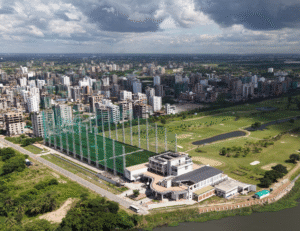
Planned townships add one important dimension to the standard checklist, and Jolshiri Abashon is the clearest example. It is a large, army planned development of roughly 2,100 acres in Rupganj, managed through Jolshiri Abashon Ltd, and organised into 17 sectors under an approved plan.
The crucial point for buyers is origin and eligibility. Jolshiri plots were originally created for the welfare of armed forces officers, and they are now available to civilians only under specific registration, vetting, and allocation processes managed by the township authority. This changes what you must verify:
- Allotment documents. Confirm the plot was properly allotted and that the allotment paperwork is genuine and in order.
- Transfer eligibility. Confirm that the plot or flat can be legally transferred to you, that any conditions on transfer have been satisfied, and that the transfer will be recognised by the authority.
- Authority recognition. Ensure the transaction follows the township authority’s process, so your ownership is recognised rather than informal.
- The usual building checks. For an apartment, still confirm the approved plan, permitted FAR, and occupancy certificate for the specific building.
The advantage of a planned township is that the documentation tends to be more organised and the framework clearer than in older, unplanned areas, which reduces some categories of risk. The essential caution is the allocation and transfer layer, which does not exist in an ordinary resale and which a lawyer familiar with Jolshiri transactions should guide you through.
Red flags that should stop you
- A price far below the local market, which often signals a document or legality problem.
- A seller reluctant to share the full document set or rushing you to pay quickly.
- A building with more floors or units than the sanctioned plan allows.
- Missing occupancy certificate on a completed building.
- Any request to pay in cash or outside proper banking channels.
- A power of attorney that cannot be clearly verified.
- In a planned area, an inability to produce clean allotment and transfer documents.
Any one of these deserves a pause and a professional review before you proceed.
The role of a property lawyer
A qualified property lawyer is not an optional luxury in a Dhaka transaction. They verify the ownership chain, check for encumbrances and hidden disputes, confirm the approvals, and, in a planned area, navigate the allotment and transfer process. Their fee is small relative to the value at stake, and their review is the single most effective safeguard against the kinds of fraud that cost buyers dearly. For NRB buyers managing a purchase from abroad, professional legal support is even more important, since remote transactions carry higher fraud risk.
Understanding the ownership chain
The most important idea in Dhaka property verification is that ownership is proven by a chain, not a single certificate. Each transfer in a property’s history should connect cleanly to the next, so that the person selling to you can trace their right back through a series of valid transactions.
This is why a lawyer does not simply look at the current deed and stop. They examine the sequence: who owned it before, how it passed to the current owner, whether each transfer was properly registered and mutated, and whether any step in the chain is disputed, forged, or missing. A break anywhere in that chain, even several transactions ago, can undermine the current owner’s title and therefore yours.
For a buyer, the practical takeaway is to insist on seeing the history, not just the present. A seller who can produce a clean, connected chain of documents is giving you real assurance. A seller who can show only the current deed and resists deeper questions is giving you a reason to be cautious.
How land records work in Bangladesh
Land records in Bangladesh sit across several registers and record types maintained over different periods, which is part of why verification requires care and often a professional. The khatian is the record of rights that lists the owner and the land, and different survey era khatians exist. Mutation, or namjari, is the process of updating these records when ownership changes, so that the register reflects the current owner.
The expansion of digital land records has made first line checks far easier than before. Through official portals such as land.gov.bd and eporcha.gov.bd, a buyer can check khatian and mutation status and confirm that the seller’s name appears where it should. This does not replace a lawyer’s full review, but it is a fast, accessible way to catch obvious problems early, and every buyer should use it before getting emotionally committed to a property.
Verification for different property types
The core documents are similar across property types, but the emphasis shifts.
For a resale ready flat, the priority is the ownership chain, the developer to landowner agreement that established the unit, the occupancy certificate, and confirmation that no loan or mortgage sits on the flat. You are buying into an existing building, so its legality and the seller’s clean title are central.
For an under construction flat, the emphasis moves to the developer’s approvals, the sanctioned plan and permitted FAR, the land on which the project is being built, and the developer’s delivery record. You are buying a future unit, so the project’s legitimacy and the developer’s reliability matter most.
For a plot, the focus is squarely on the land records, the khatian and mutation, the ownership chain, and any encumbrances, since there is no building to inspect and the land documents carry the full weight of your security.
The cost of skipping verification
It is worth being blunt about what is at stake, because the temptation to save time or trust a familiar seller is real. Buyers who skip verification can find, sometimes years later, that the title is disputed, that the same property was sold to someone else, that a court case predates their purchase, or that the building exceeds what was legally permitted. Any of these can make the property impossible to sell or mortgage and can trigger years of costly litigation.
Against that, the cost of doing it right, a lawyer’s fee and some time, is small. There is no purchase in Dhaka where the savings from skipping verification could justify the risk it creates. The buyers who lose money are almost never the ones who over verified. They are the ones who trusted, rushed, or assumed. Treat thorough verification as the price of a secure purchase, because that is exactly what it is.
A practical timeline for verification
Verification works best as a sequence rather than a scramble at the end, and building it into your buying timeline keeps you calm and in control.
Start before you fall in love with a property. As soon as you shortlist a flat or plot, do the quick first line checks yourself: confirm the seller’s name against the khatian and mutation through the official land portals, and ask for the basic document set. This early screen catches obvious problems before you invest emotion or a token payment.
Once a property passes that screen and you are seriously interested, bring in your lawyer for the full review. This is where the ownership chain is traced, encumbrances are checked, approvals are confirmed, and, for developer projects, the developer to landowner agreement and the developer’s standing are examined. Give this stage real time. Rushing it defeats its purpose.
Only after the lawyer confirms the documents are clean should significant money change hands, and every payment should go through banking channels with proper documentation. Finally, after registration, complete the mutation promptly so the records reflect you as owner. Treating verification as a staged process, screen, review, then commit, rather than a last minute formality is what keeps buyers safe. The buyers who get hurt almost always compressed or skipped one of these stages under pressure.
When extra caution is warranted
Some situations carry higher risk and deserve extra care. A purchase managed from abroad, common for NRB buyers, raises fraud risk because you cannot be present, so professional legal support and correct banking channels become even more important. A transaction involving a power of attorney rather than the owner in person warrants careful verification that the power is genuine and valid. A property in a planned area with an allocation system, like Jolshiri Abashon, adds the allotment and transfer layer on top of the standard checks. And any deal where the price seems too good, the seller too eager, or the documents too thin should slow you down rather than speed you up. Recognising these higher risk situations and responding with more diligence, not less, is what separates a secure purchase from an expensive lesson.
Key takeaways
- Ownership in Bangladesh is proven by a chain of documents, so trace the title deed back through several transactions, not just the current one.
- Verify the core set: title deed, mutation and khatian, tax receipts, approved plan, developer to landowner agreement, no encumbrance certificate, and occupancy certificate.
- Use official land portals such as land.gov.bd and eporcha.gov.bd for a quick first line check of khatian and mutation status.
- A qualified property lawyer is essential, since their review is the single most effective safeguard against the fraud that costs buyers crores each year.
- Keep all payments in traceable banking channels, never cash, so your ownership and payment trail is clean and provable.
- Verify a power of attorney carefully, since misused ones are a common route to fraud.
- In planned areas like Jolshiri Abashon, add the allotment and transfer eligibility layer on top of the standard checks.
- Treat verification as a staged process, screen then review then commit, and respond to higher risk situations with more diligence, not less.
Frequently asked questions
What documents should I check before buying a flat in Dhaka? Verify the title deed, mutation and khatian, current tax receipts, the RAJUK approved plan, the developer to landowner agreement, a no encumbrance certificate, and the occupancy certificate for ready flats, ideally with a property lawyer.
How can I verify a khatian or mutation online? You can check khatian and mutation status through official government land portals such as land.gov.bd and eporcha.gov.bd, which is a useful first step alongside a lawyer’s full review.
Do I need a lawyer to buy property in Dhaka? It is strongly advised. A property lawyer verifies the ownership chain, checks for encumbrances and disputes, confirms approvals, and reduces the risk of fraud, which is common in property transactions.
What is a no encumbrance certificate? It confirms the property is free of existing loans, mortgages, or legal claims, so you do not inherit someone else’s debt or a live dispute after buying.
What extra documents do I need to check when buying in Jolshiri Abashon? In addition to the standard checks, confirm the allotment documents, the transfer eligibility of the plot or flat, and that the transaction follows the township authority’s process, since Jolshiri plots were originally created for armed forces officers and are transferable to civilians only under specific conditions.
Why is a price far below market a warning sign? An unusually low price often signals a document or legality problem, such as a clouded title, an over built structure, or a dispute. It is a reason to verify more carefully, not to rush.
Can I buy property in Dhaka without visiting the sub registrar office? Registration is completed at the sub registrar office and is mandatory to establish legal ownership. A properly executed power of attorney can allow a trusted representative to handle registration on your behalf, which is common for buyers who cannot attend in person.
General information, not legal advice. Consult a qualified property lawyer for your specific transaction.