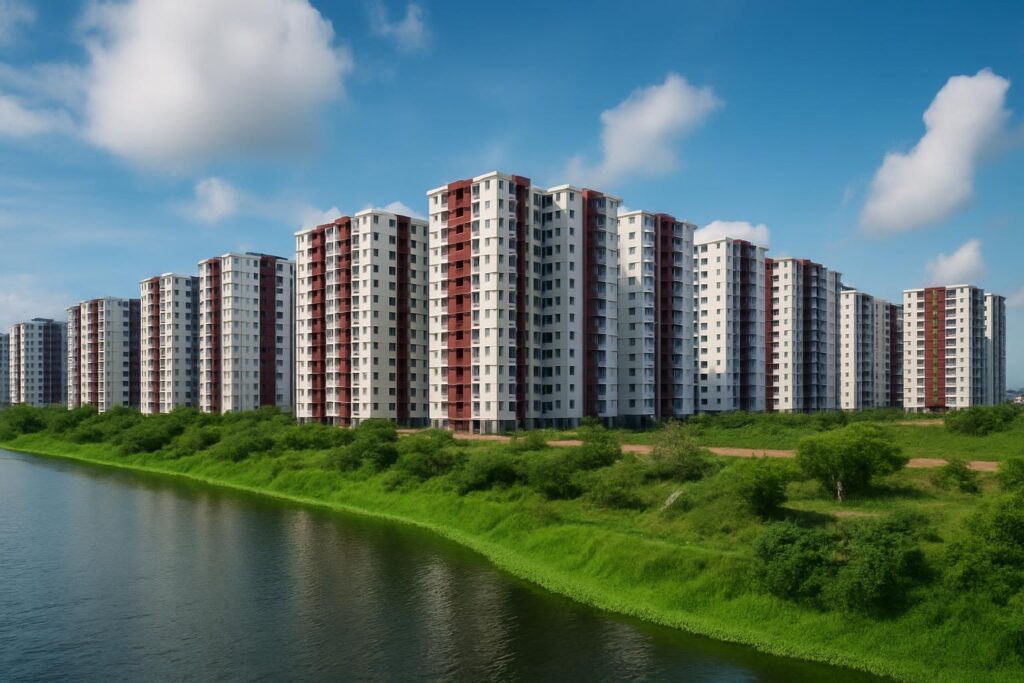

Drive along the Ashulia embankment road on a clear afternoon and a wall of tall buildings rises straight out of flat, open land. That is RUAP. People in Dhaka call it a few different things. Some say Rajuk Uttara Apartment Project. Others just say the Diabari project, or Sector 18. Whatever name sticks for you, it has turned into one of the more photographed corners of the city, and the reason is not only its size.
RUAP sits in Sector 18 of Uttara, on about 214 acres of land that RAJUK set aside for the country’s first and largest planned apartment project. The idea behind it was practical. Give middle and lower income families a proper home away from the crowding of central Dhaka. What nobody fully planned for was how good the place would end up looking.
A skyline that stands alone
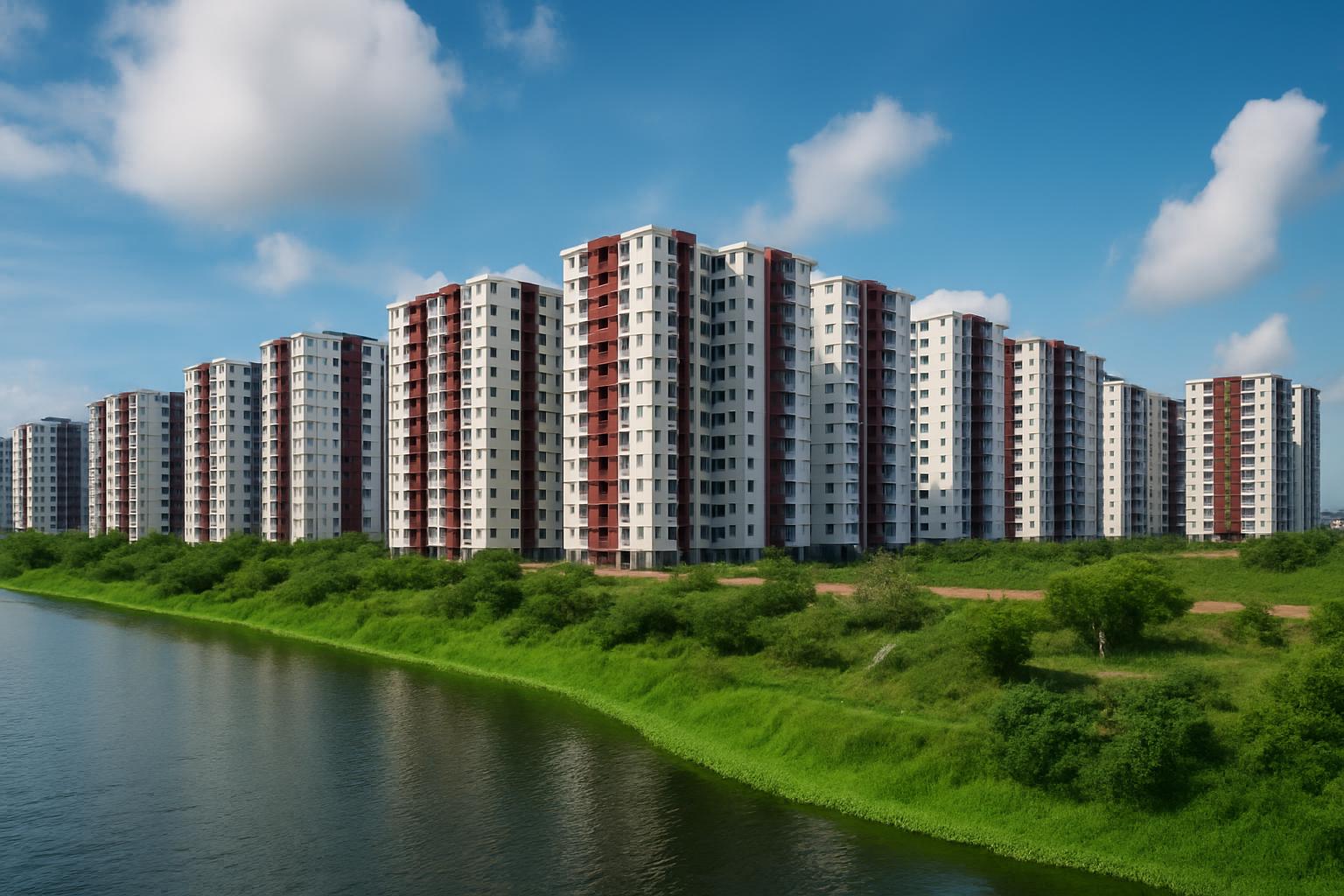
Most tall buildings in Dhaka fight for space. They lean into each other, block each other’s light, and share the same grey haze. RUAP does not feel like that. The towers here stand in open ground, so from a distance they read as a clean skyline instead of a jumble.
That flat surrounding landscape does most of the work. When the sky is clear, the buildings catch the light on their west faces in the late afternoon and glow for an hour before sunset. Photographers figured this out early. On weekends you will find people setting up tripods along Avenue 1 just to catch that stretch of towers against an empty sky.
The season that draws the crowds
If there is one thing that made RUAP and the wider Diabari area famous with ordinary Dhaka residents, it is the kaash phul. Every autumn the open land near the project fills with Kans grass, and the white flowering tops sway across whole fields.
For a few weeks the place stops feeling like a housing project at all. Families come out with children. Couples come for photos. Vendors set up along the edges. It has become a small seasonal ritual for people who rarely get to see that much open green inside the city. You would not expect a government apartment scheme to double as a wildflower spot, but that is exactly what happens here.
Water at the edge
Behind the complex sits the Diabari lake, and it gives the whole area a softer edge than most parts of Uttara. The water is calm through most of the year. There are paddle boats. There is even a small kayaking setup that runs during the day for anyone who wants time on the water.
A lake behind a residential block changes the feel of a place. It cools the air a little. It gives residents somewhere to walk in the evening. And it means that when you stand on a west facing balcony in one of the towers, you are often looking out at water and open land rather than the back of another building.
Buildings named like a garden
There is a small detail most visitors miss. The buildings at RUAP are not just numbered. Many carry names drawn from Bengali flowers and climbing plants. Krishnachura. Madhabilata. Kunjalata. Kolmilota.
It sounds like a minor thing. It is not. Walking through a project where the towers are named after flowering vines instead of Block C7 gives the place a warmth that concrete alone never manages. Someone thought about it. That intent shows.
The metro changed everything
For years the main knock against RUAP was distance. It felt far. Then MRT Line 6 opened, and the trains start their run right from the Diabari end. Suddenly the project sat next to the fastest way into the heart of the city.
That single change did two things at once. It pushed up demand for the flats, and it pulled more people out to the area to see what all the fuss was about. What used to feel like the far edge of Uttara now feels like a place you can reach. Beauty is easier to enjoy when it is not a two hour crawl away.
Everyday life, done well
RUAP is not only postcard shots and autumn grass. It works as a place to live, and that ordinary function is part of the appeal.
- A food court near the Avenue 1 entrance opens in the evening and turns busy with street food and families.
- Mosques, schools, and shops sit close by, so daily needs do not require a trip out.
- The flats themselves run around 1654 square feet with three bedrooms, four baths, and multiple balconies, which is generous for the price bracket.
- The airport is roughly a ten minute drive, which few residential areas in Dhaka can claim.
None of that is glamorous on its own. Together it is the thing that lets residents actually enjoy the setting instead of just admiring it from a car window.
Why it holds up
Plenty of housing projects in Dhaka look good in a rendering and disappoint in person. RUAP is closer to the opposite. Its scale, its open land, its lake, and its seasonal fields give it a character that a brochure struggles to capture.
It is a government project built for regular families, and it never pretended to be a luxury address. That honesty is part of why it feels good to be there. The beauty is not manufactured. It comes from open space, a bit of water, a stretch of white grass in autumn, and a row of towers that finally have room to breathe.
For anyone tracking where Dhaka is heading, RUAP is worth a visit. Go in the late afternoon. Walk toward the lake. Stay until the light hits the west faces. You will understand why people keep coming back.